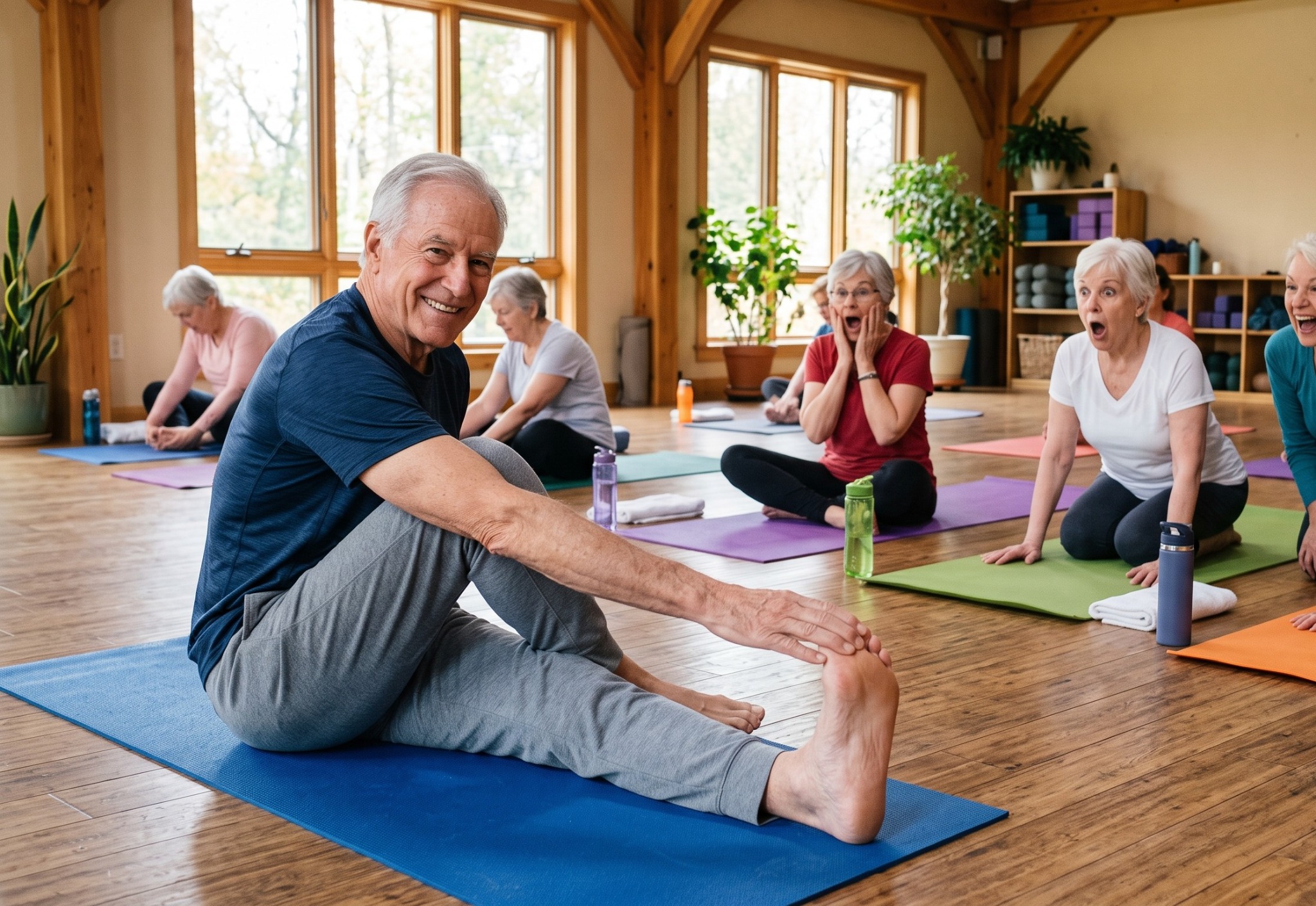
How would you like to feel a little steadier on your feet, move more comfortably, and enjoy a peaceful moment in your day?
Yoga can be a welcoming way to begin. You can start with gentle movements, comfortable breathing, and a practice that fits your body today. You don’t need to be able to touch your toes!
At Healthy Agers, we believe in making room for small, enjoyable habits that support a fuller life. Yoga offers plenty of opportunities to do just that.
Yoga combines movement, breathing, and mindful attention. The World Health Organization highlights its potential to support strength, flexibility, balance, and mobility as we age—abilities that help us stay active and independent. Read the WHO overview.
How yoga can support healthy aging
- Better balance. Research suggests yoga can improve balance in older adults. This is encouraging, although better balance does not automatically mean that yoga alone prevents falls.
- Strength and easier movement. Adapted poses can challenge your muscles and gently work through a comfortable range of motion. These are useful qualities for everyday activities, from getting dressed to enjoying a walk.
- A calmer mind. Paying attention to your breath and movement creates space to slow down. Research suggests yoga can help reduce stress and support emotional well-being.
- Support for sleep. Studies, including research involving older adults, suggest yoga may improve sleep. The benefits vary from person to person.
These benefits are supported by the WHO’s healthy aging overview and the U.S. National Center for Complementary and Integrative Health.
Start gently—with a chair if you like
A good place to start is a beginner class described as gentle yoga, yoga for older adults, or chair yoga. Chair yoga allows movements to be adapted for people who find standing or getting down onto the floor difficult. An instructor experienced in working with older adults can help you choose suitable movements and learn them comfortably. NCCIH guidance for older adults.
Make the practice fit your body
For your first session, give yourself permission to take things slowly. Tell the instructor about any painful joints, balance difficulties, or other limitations. Use a sturdy chair or wall whenever you need support, keep breathing naturally, and avoid forcing a stretch. Stop if a movement causes pain or dizziness.
If you have osteoporosis, a recent operation, or another condition that could affect exercise, ask your healthcare professional about suitable movements before starting. Some poses may need to be changed or avoided. Yoga safety guidance.
One small first step
You can make your first goal wonderfully simple: find a suitable class, try a short session, and notice how you feel. Let your practice grow at a pace that feels manageable.
There is no need to compare your flexibility or progress with anyone else. Your starting point belongs to you.
What has your experience been?
Have you tried yoga or chair yoga? What did you enjoy—and if you haven’t tried it yet, what would help you get started?
Share in our Facebook community (opens in a new tab)